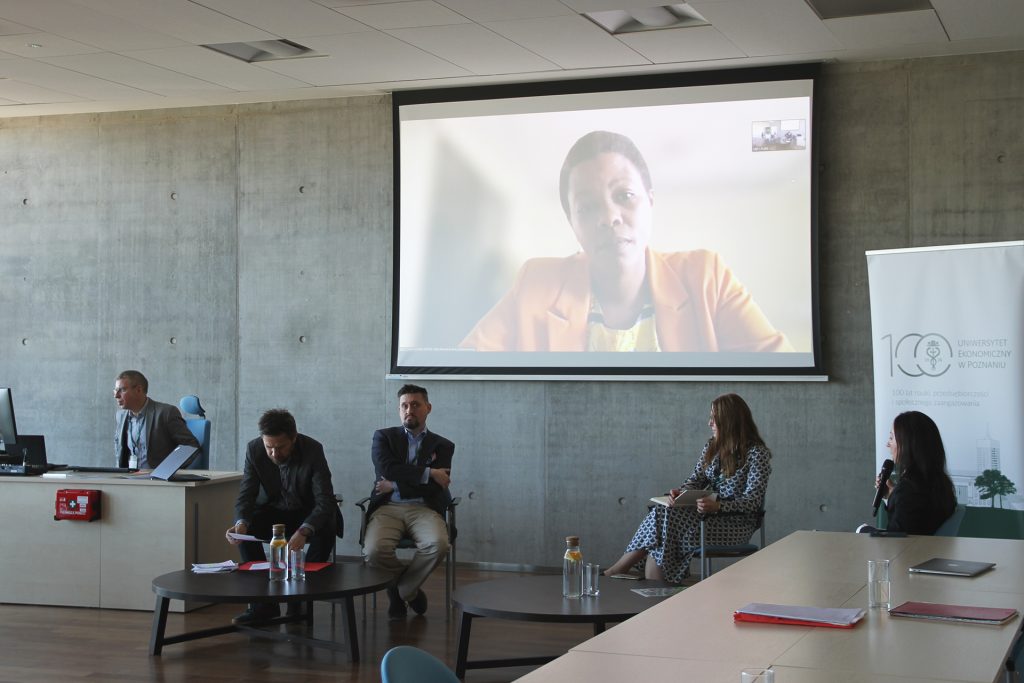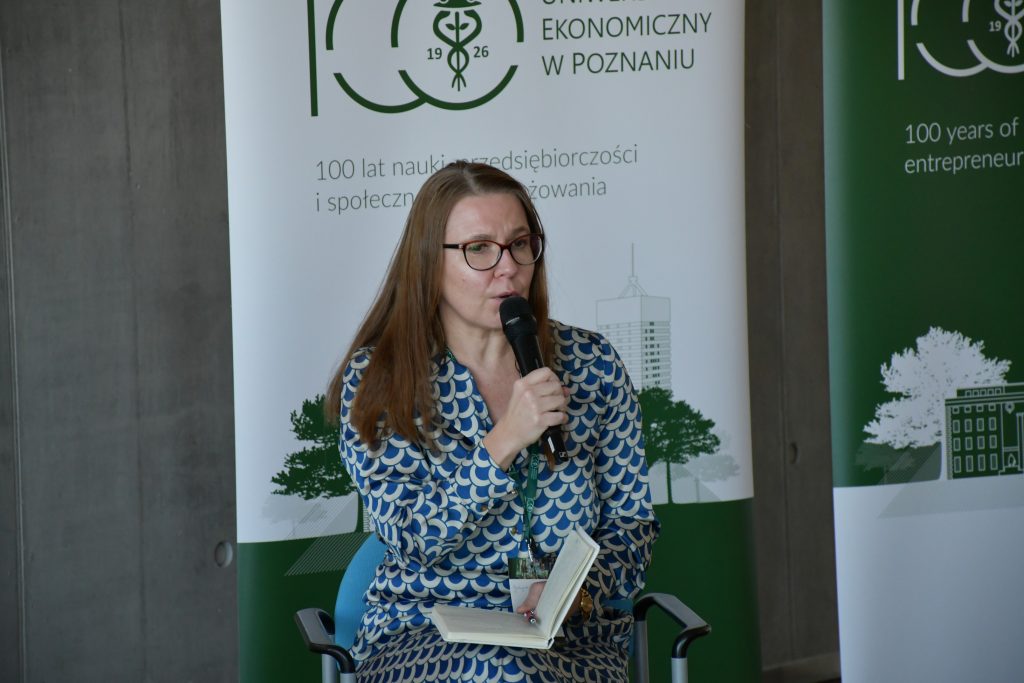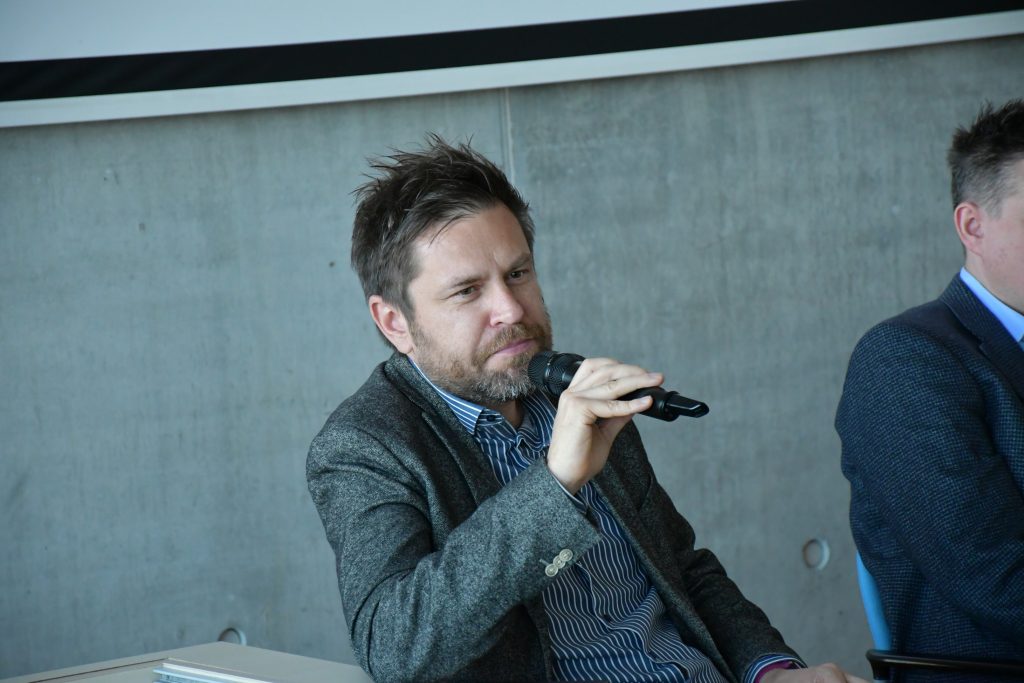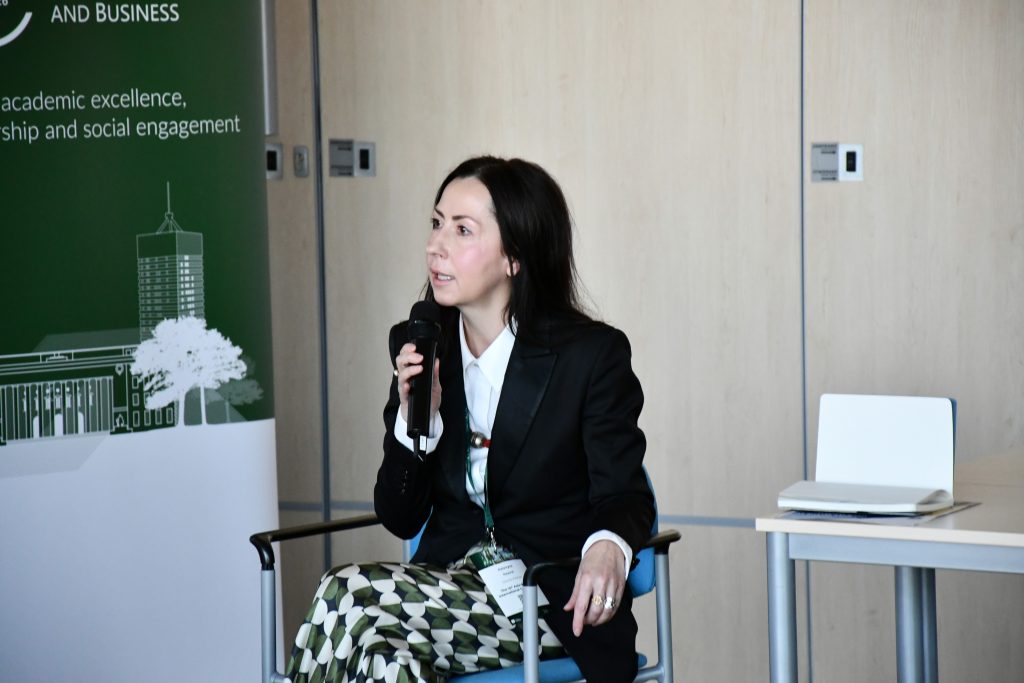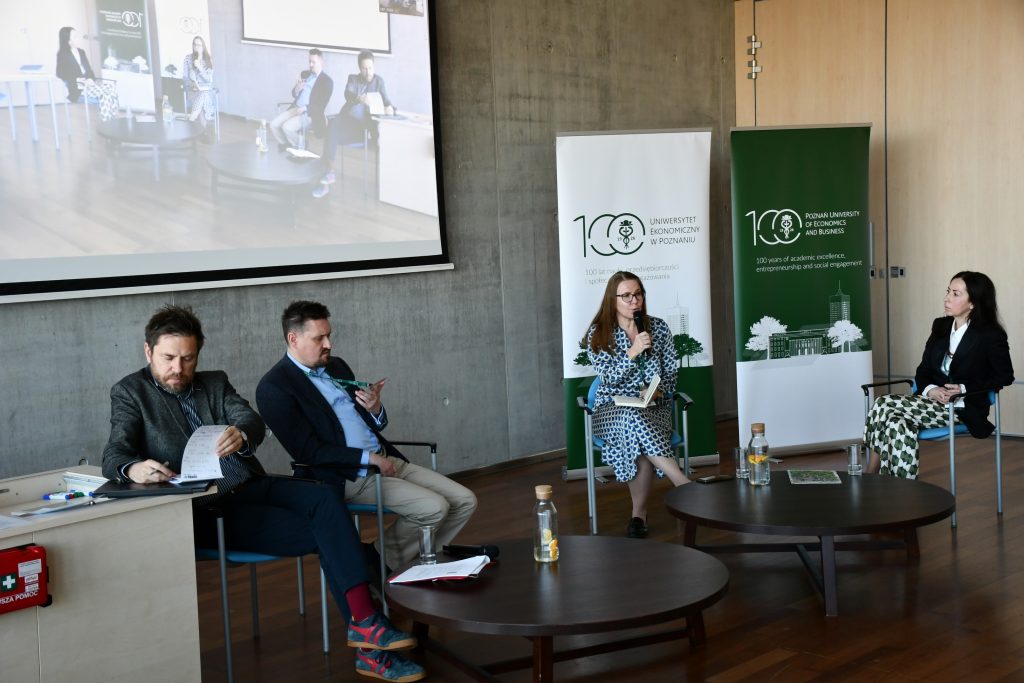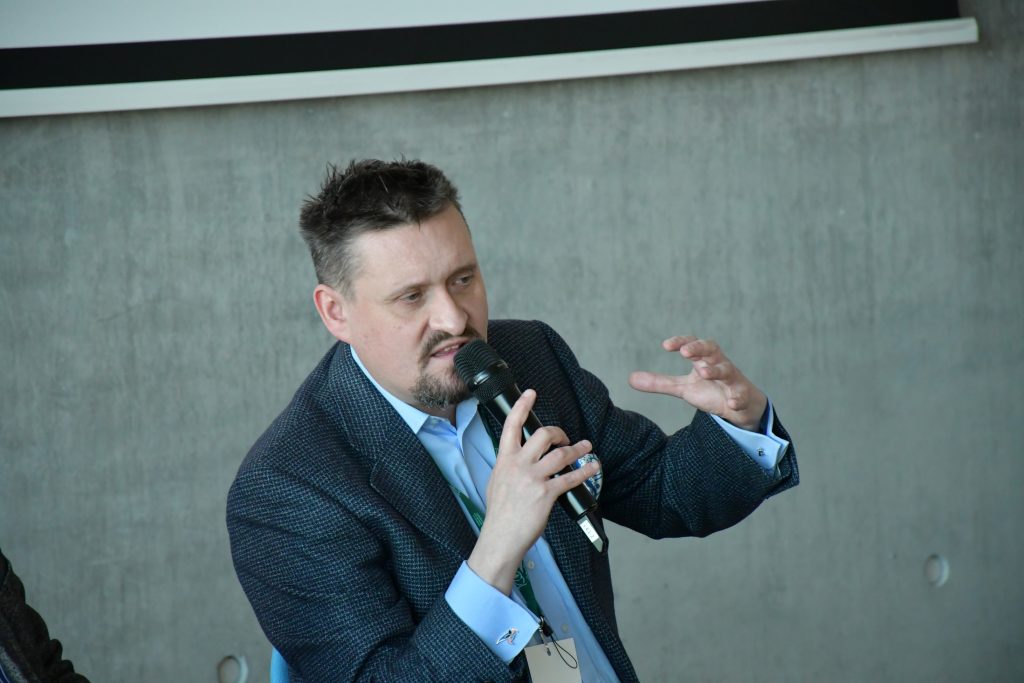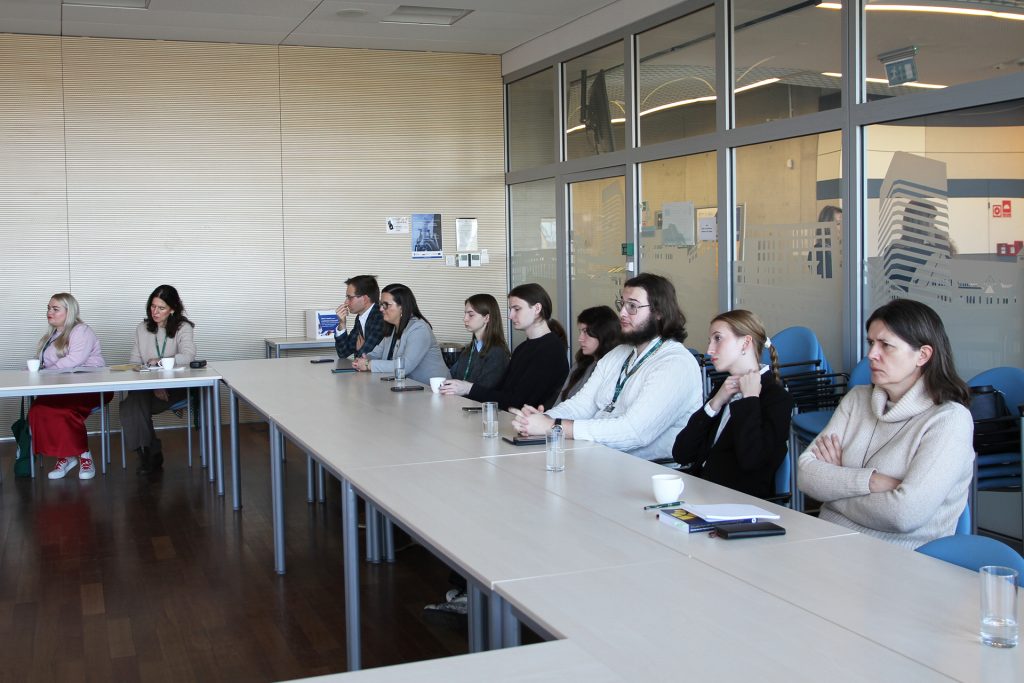
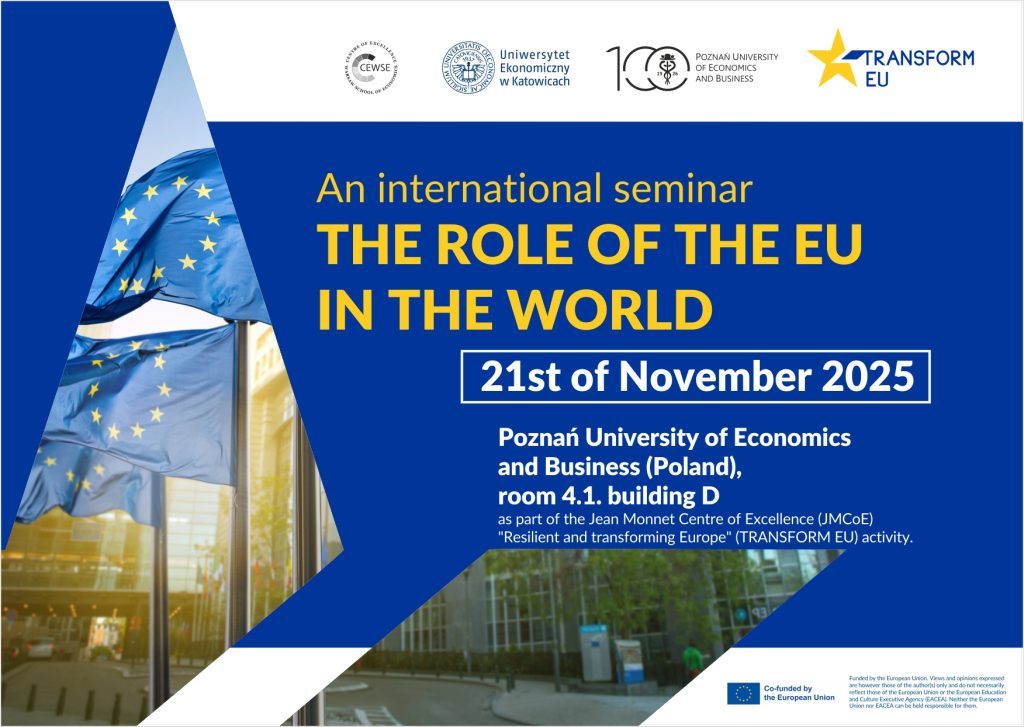
An international seminar entitled “The Role of the EU in the World” took place at the Poznań University of Economics and Business on the 21st of November 2025. The seminar, organised within the framework of the Jean Monnet Centre of Excellence (JMCoE) “Resilient and Transforming Europe” (Transform EU) project, was another in a series of events held as part of this initiative. This edition focused on the EU’s place in today’s world, its relations with selected partners, and the political and economic challenges it faces at the global level.
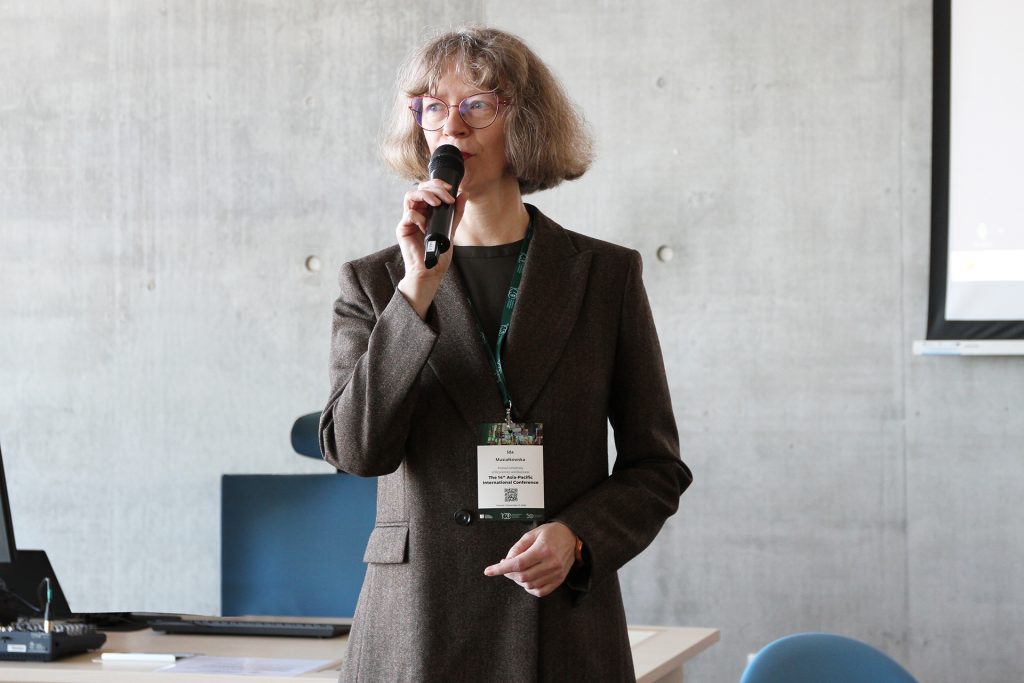
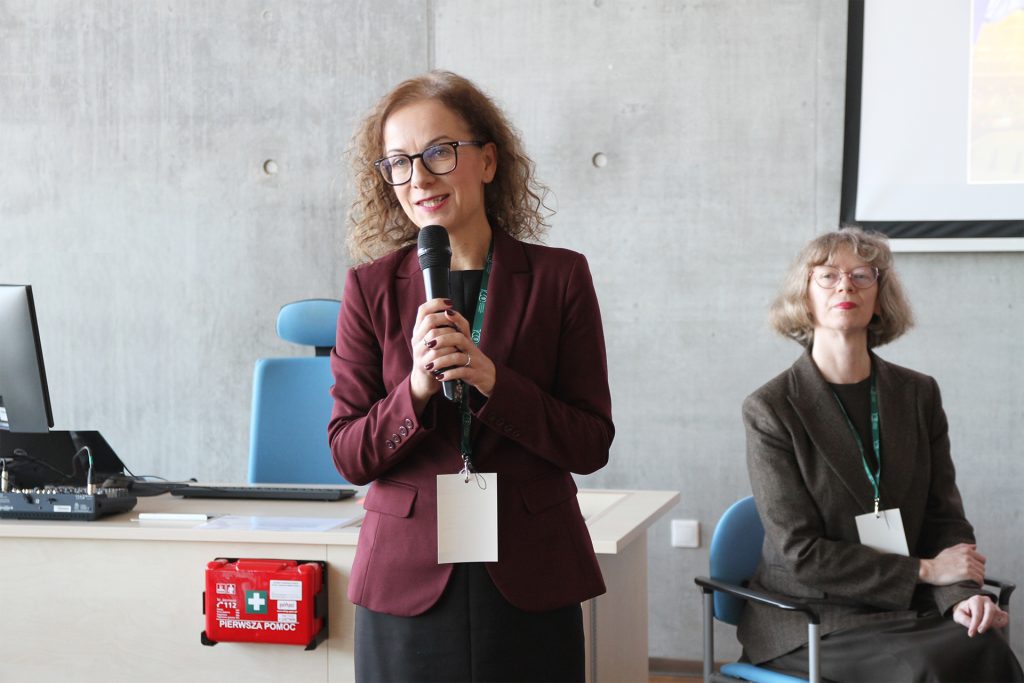
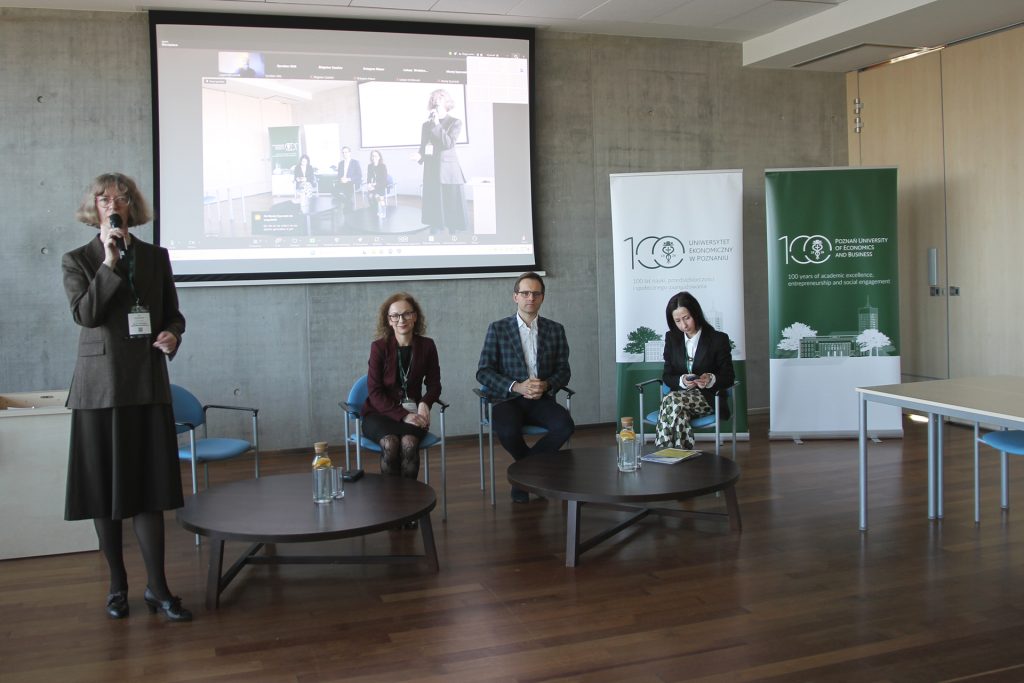
The seminar began at 9:00 a.m. and was officially opened by; Prof. Barbara Jankowska, Rector of the Poznań University of Economics and Business; and Prof. Piotr Trąpczyński (PUEB), Director of the Institute of International Business and Economics and Prof. Ida Musiałkowska (PUEB), Coordinator of the JMCoE Resilient and Transforming Europe project
In their opening remarks, all speakers emphasised the timeliness and importance of the topic. The EU is currently confronted with numerous global challenges, including geopolitical and geoeconomic tensions. They also highlighted the need for the EU to define its role in this rapidly changing environment, maintain its competitiveness, and build European strategic autonomy in a responsible manner. The seminar provided an excellent opportunity to explore the EU’s cooperation with various regions of the world.
The seminar was chaired by Prof. Katarzyna Nawrot (University of Warsaw) and Dr. Grzegorz Mazur ( Poznań University of Economics and Business).
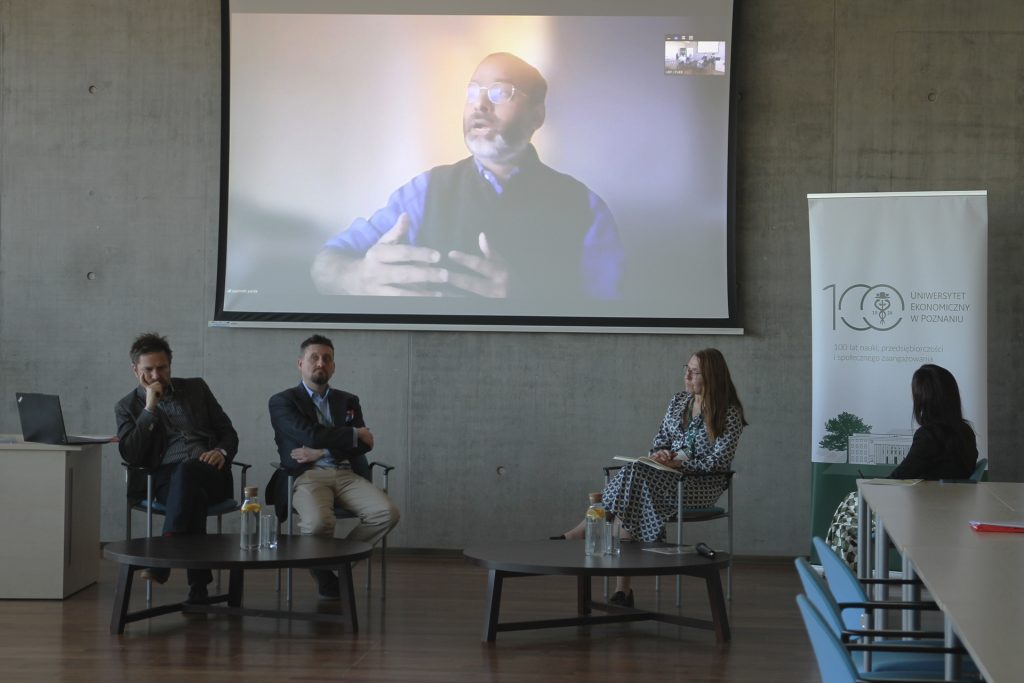
Asian Perspective: Prof. Jagannath Panda, Head of the Stockholm Center for South Asian and Indo-Pacific Affairs (SCSA-IPA)
The first speaker was Prof. Jagannath Panda from the Stockholm Center for South Asian and Indo-Pacific Affairs (SCSA–IPA). In his presentation, Prof. Panda highlighted the value of this seminar, noting that it brings together perspectives from many regions of the world. Looking at the EU today from the standpoint of Asian countries, he stressed that it should no longer be viewed as an external or distant actor. In the contemporary world, we are becoming increasingly interlinked, and the EU’s role in the Indo-Pacific region will continue to grow. The EU has become a critical economic and trade component for the Indo-Pacific.
He also emphasised that the EU itself is making significant efforts to develop multifaceted cooperation strategies with this region and its countries. Institutional linkages supporting EU–Asia relations have been expanding for many years and remain an important foundation for further cooperation.
Prof. Panda argued that the EU may also serve as a model for collaboration among Asian countries themselves, with the European integration process representing a genuine success story. In the context of growing geopolitical tensions, he pointed to the EU as an important partner in matters of security as well as in the broad field of development support. The EU plays a crucial role for many Asian states – for example in climate protection – especially at a time when the level of engagement and development assistance from the United States has been declining.
He further underlined the significance of the Global Gateway Strategy and the EU’s increasing activity in this area across the Indo-Pacific. Of particular importance is the fact that the EU currently maintains strategic partnerships with many countries in Asia (including Japan, India, ASEAN, Indonesia, and South Korea), which is essential for the continued development of multidimensional cooperation, such as joint efforts to combat climate change. This has strategic value and critical importance, especially in the context of the shifting and uncertain role of the United States in the region.
African Perspective: Dr. Mafini Dosso, Cofounder & Head of Research at “The Organisation Internationale de l’Innovation pour des Territoires et Industries Durables” (OIITID), Côte d’Ivoire
Dr. Mafini Dosso, Cofounder and Head of Research at OIITID (Côte d’Ivoire), presented the African perspective on cooperation with the EU and on the EU’s role in the context of global change, with particular attention to collaboration in the field of innovation development. This aspect is becoming increasingly significant due to Africa’s growing importance in the global economy, which in turn strongly influences the evolution of EU–Africa relations.
In her presentation, “Beyond the narrative: grounding the AU–EU innovation partnership in local realities”, Dr. Dosso emphasised at the outset that Africa cannot be viewed from a European standpoint as a monolithic entity. It is a continent of countries highly diverse in many respects, and each state or region requires a different approach, perspective, and strategy for developing relations with the EU. In this context, any single EU Strategy towards Africa may not be equally suitable for all countries in the region; a differentiated approach is needed. She also highlighted that the nature of EU–Africa relations is shifting — from donor–recipient dynamics towards a genuine partnership.
Dr Dosso discussed the role and character of innovation in African countries today, emphasising that it has its own distinct features: agencies are primarily productivity facilitators, and the digital technologies commonly used are not always high-tech. In many cases, investment promotion agencies must perform fundamental tasks that are essential for supporting innovation, including raising awareness and building knowledge at multiple levels.
Another important point she raised was that while innovation and technology transfer are crucial, the role of the EU should not be to “save African innovation,” but rather to connect with it. Supporting innovation in African countries requires avoiding the direct transfer of European templates; instead, solutions should be co-created in ways that respect and incorporate the specific contexts of individual African states.
Chinese Perspective: Dr. Justyna Szczudlik, Deputy Head of Research & China Analyst, Polish Institute of International Affairs
The next speaker was Dr. Justyna Szczudlik from the Polish Institute of International Affairs, who presented a perspective on EU–China relations in the context of recent geopolitical and geoeconomic developments, focusing on how the EU is perceived by China. In her presentation, she outlined two distinct viewpoints: the official diplomatic narrative and China’s real, internal approach toward the EU.
In the first case — referring to the official rhetoric — China emphasises that the European Union is a great power and an important actor in a multipolar world. In China’s official foreign policy discourse, the EU is presented as one of the three superpowers, alongside the United States and Russia. China also officially expresses support for European integration and for European strategic autonomy, especially in aspects related to reducing the EU’s dependence on the United States and its traditionally strong transatlantic ties. In this context, China supports EU efforts aimed at increasing its independence and self-sufficiency.
Dr. Szczudlik then presented the second perspective, based on the real thinking that dominates within China’s leadership. Here, it is essential to distinguish between the economic and political dimensions. In China’s unofficial and pragmatic approach, the EU remains a highly important player in the global economy, particularly considering China’s continued reliance on exports and its overcapacity in certain sectors. China expects the EU to maintain strong economic relations, to avoid politicising economic ties, and to continue practical cooperation.
However, China’s view is markedly different when it comes to the EU as a political and strategic actor. From this standpoint, China considers the EU to be largely irrelevant. In Beijing’s assessment, the EU is not an independent political entity; it is seen as heavily dependent on the United States due to its security reliance. While China acknowledges that the EU has begun to recognise its excessive dependence on the U.S., this does not alter China’s fundamental perception. Developments within the EU, according to China, are driven more by shifts in U.S. policy than by independent strategic choices in Brussels. The EU also suffers from a certain degree of political inertia.
Dr. Szczudlik concluded her presentation by noting that the real significance China attributes to the EU became evident during the 2025 EU–China summit. Diplomatically, China signaled the EU’s position by cancelling the planned meeting in Brussels and reducing the rescheduled meeting in China to a single day. The EU had expected that, in light of more difficult U.S.–China relations, Beijing would increase its engagement and offer more substantive proposals, which did not happen. In the context of transatlantic tensions and uncertainty about the future of EU–U.S. relations, China adopted a ‘wait-and-see’ approach, likely anticipating potential concessions from the EU in the future.
European Perspective: Jarosław Marcin Domański, Senior Advisor, Chancellery of the Prime Minister of Poland
The final presentation, offering an Eastern European perspective, was delivered by Jarosław Marcin Domański, Senior Advisor at the Chancellery of the Prime Minister of Poland. He emphasised the more practical character of his remarks. He shared several reflections on the EU’s relations with the countries of Eastern Europe, noting that the security dimension remains the most important aspect of the EU’s current engagement with the region.
The present state of EU–Russia relations was described as a “broken home.” He outlined how these relations had evolved in recent years and what ultimately led to their current condition. Initially, it was believed that Russia would be modernised into a stable, democratic, and prosperous country. These expectations, however, proved to be based on flawed assumptions. Moreover, the EU was never perceived by Russia as an independent actor, but rather as a vassal of the United States. This perception has long persisted in Russia’s foreign policy thinking.
He briefly recalled the period when EU–Russia relations were framed in terms of a strategic partnership, after which various difficulties began to emerge. The enlargement processes of NATO and the EU increasingly converged, and Russian policymakers came to view these developments as a threat. Key events that accelerated the deterioration of relations included the Orange Revolution in Ukraine and Russia’s 2008 invasion of Georgia, which effectively ended the brief ‘honeymoon’ in mutual relations.
Jarosław Marcin Domański concluded by identifying four main factors that contributed to the current state of EU–Russia relations. First, the two actors represent fundamentally different visions of security in Europe, putting them on a collision course. While the EU grounds its security principles in treaties and legal frameworks, Russia bases its approach on spheres of influence. Second, the EU and Russia embody profound differences in political values (democracy versus authoritarianism). Third, an ongoing challenge has been — and in some respects remains — the coherence of EU foreign policy. This issue affects not only EU–Russia relations but also the EU’s engagement with other regions. The lack of a fully unified EU foreign policy stance (stemming from the Treaty architecture and the division of competences) continues to pose significant difficulties, particularly in relations with Russia and China, as a result of differing national interests among EU member states. Fourth, there are major differences in economic models (a competitive, rules-based market economy in the EU versus a state-dominated, often corrupted, non-rules-based system in Russia).
Domański emphasised that the EU now finds itself in confrontation with Russia. Important questions remain open: to what extent the EU will emancipate itself from the U.S. security umbrella, and to what degree it will be able to build a more coherent, strategic, and security-focused partnership with other global actors.
Discussant: Prof. Jakub Kociubiński, University of Wrocław
The next speaker was Prof. Jakub Kociubiński from the University of Wrocław, who acted as a discussant responding to the presentations delivered by the previous speakers. In his commentary, he noted that speaking of a single European perspective in cooperation with various partners or regions may be somewhat misleading, as it is often difficult to develop such a unified perspective within the EU. He also pointed out that at a certain stage in its relations with selected partners, the EU attempted to export its economic model through a number of agreements; however, this strategy proved unsuccessful in many respects.
Prof. Kociubiński further emphasised that in the EU’s relations with external partners, inevitable consequences play an extremely important role. It is crucial for the law to be enforced — yet this was not the case in relations with Russia or China. The EU is often perceived as the actor that adopts new rules, but it must demonstrate not only that it possesses instruments of influence, but also that it is willing to use them. The challenge, he argued, lies in achieving coherence across the Union and in making more decisive use of the policy tools already available.
He stressed that the EU is adapting to new realities, and that now is the moment to show the political will to use instruments that protect the Union’s interests. This, in turn, will shape its political role. The EU must build its political standing and position itself in the new geopolitical landscape not merely as a large common market, but as a significant political partner.
The seminar programme is available for download
Look at the photo gallery